North and South Longteng Broken Bridge: What Is the Difference?
The red-brick ruins beside the road are the northern section most people see. The south broken bridge is what remains of the same original structure across the valley. They share a history but differ in location, viewpoints and access.
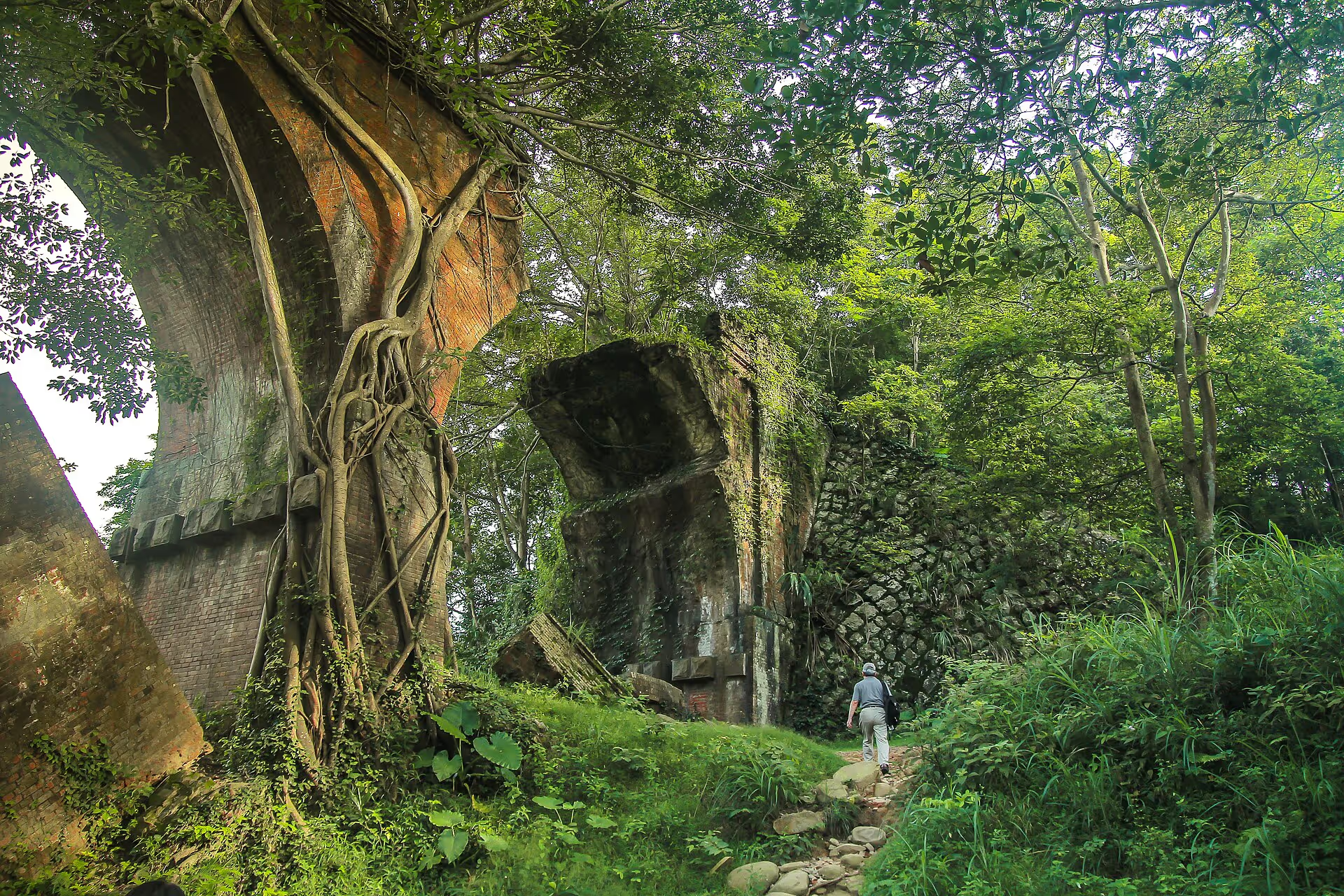
Northern section
Main visitor area
Southern section
Use the relevant route
Relationship
Parts of one original bridge
Photo focus
Brick arches and broken edges
The north is easiest to reach
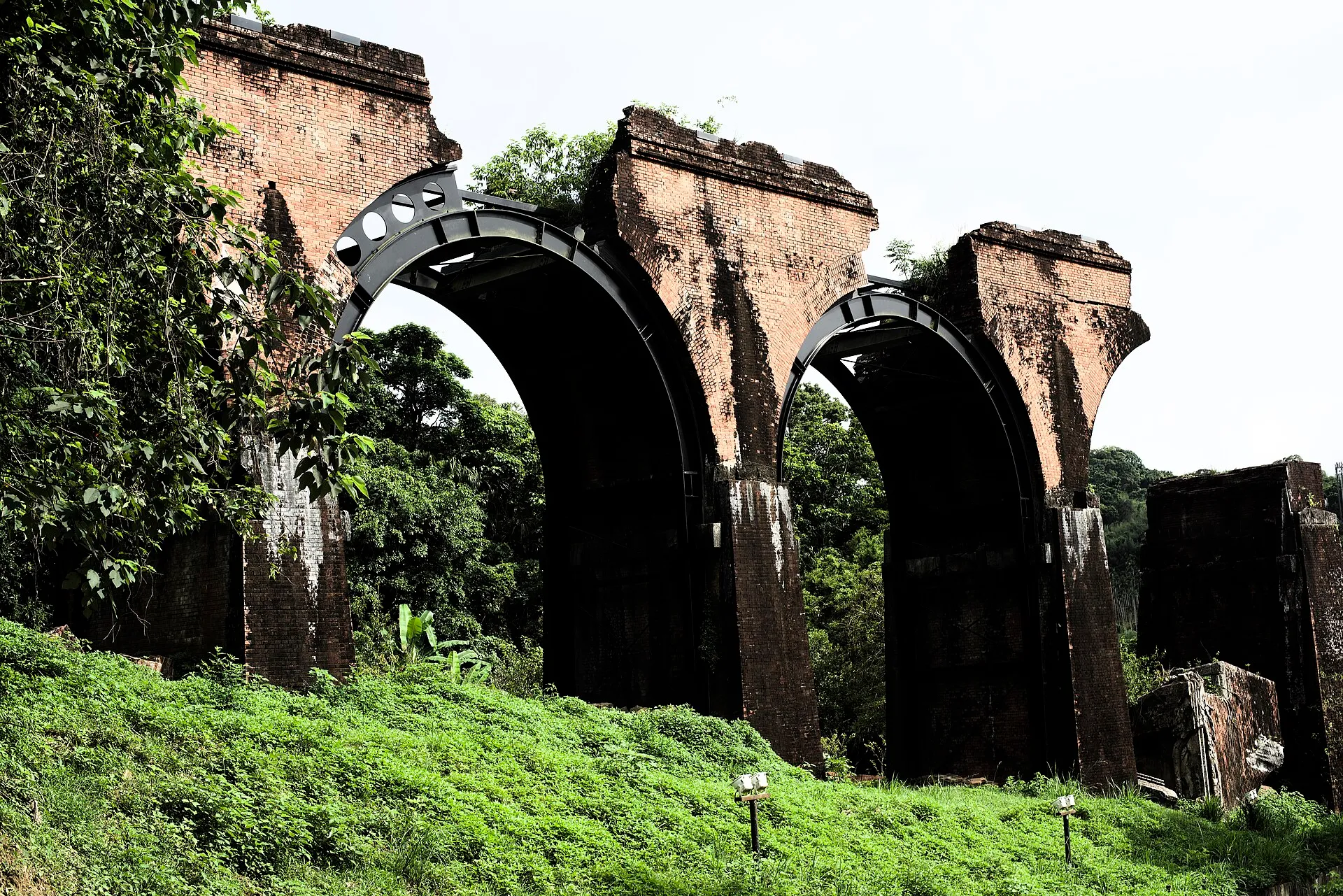
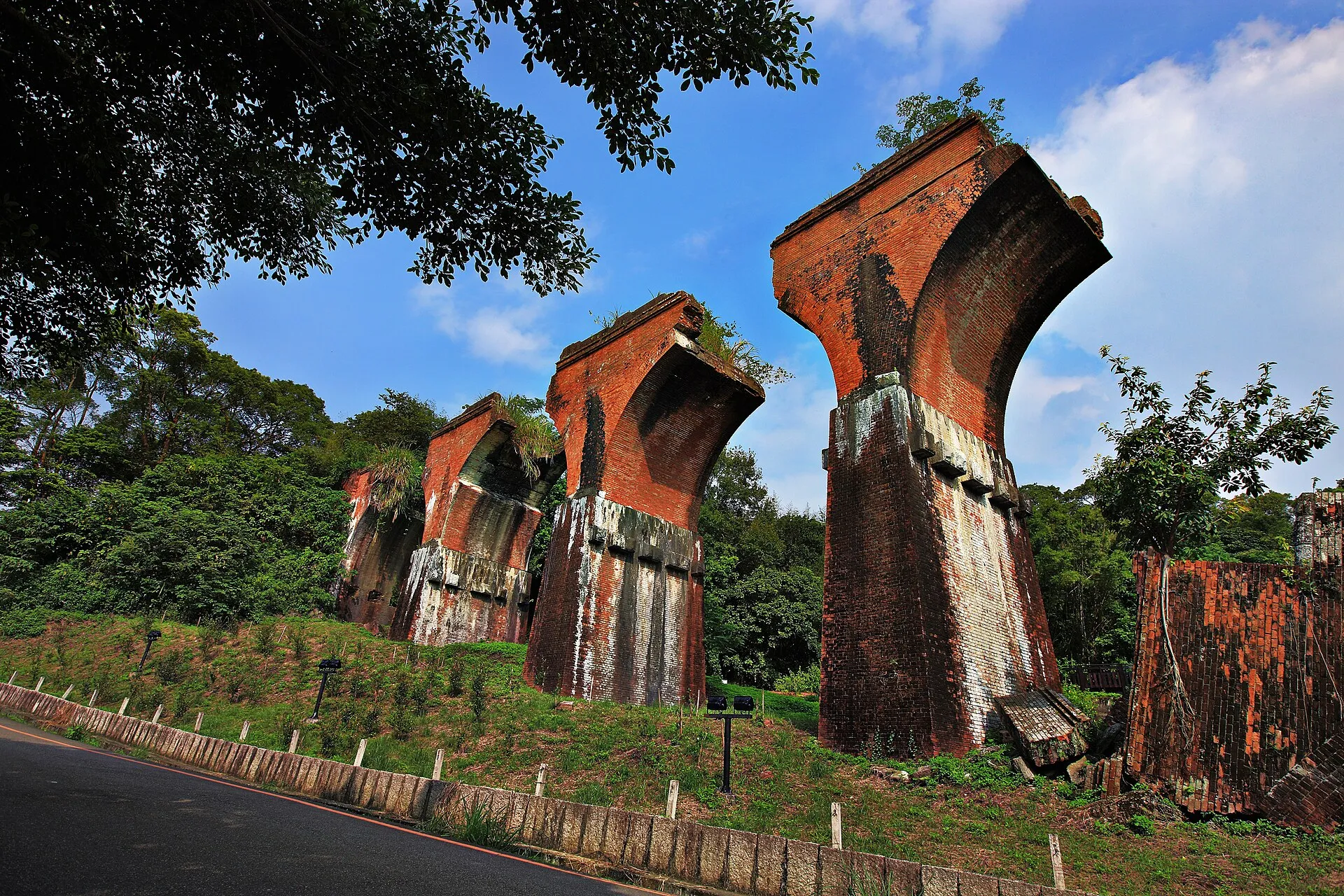
These monumental brick arches appear in most visitor photographs.
The south is less obvious
It cannot simply be seen by walking around the back of the main entrance.
The iron bridge is west
The replacement railway alignment runs beside the original remains; it is a separate bridge.
What is the north broken bridge?
The northern ruins are the red-brick remains most visitors first see when they arrive at Longteng Bridge. Tall piers, partial arches and protective reinforcement are concentrated around the main visitor area, suitable for short stops, photography and interpretation panels.
Where is the south broken bridge?
The southern remains lie across the valley on the south side of the original Yutengping Bridge. They are not just around a corner within the north-side visitor area: reaching their viewing route requires a different approach or an appropriate rail-bike itinerary.
The Miaoli tourism portal introduces both sections together; always distinguish their actual visitor access points when planning.
How were the two sections once connected?
The original railway bridge crossed the valley using brick piers, arches and other bridge structures. The devastating 1935 earthquake damaged it severely. Railway traffic later moved onto the newly built Yutengping Iron Bridge to the west, while fragments of the old bridge remained on both sides of the valley.
Which route should you consider for the south bridge?
Start by checking Old Mountain Line Rail Bike Route A. Its published route description includes the iron bridge, a distant view of the northern remains and the southern broken bridge. Confirm stops, commentary and available departures directly with the operator.
Is it incomplete to see only the north section?
Not at all. The north side already conveys the size of the brick arches and the earthquake damage. For first-time visitors, people with little time or anyone who walks slowly, it is the core experience.
The south side is an optional deeper exploration for those interested in history and railway routes.
How can you identify each part in photos?
- Huge consecutive brick arches next to the main recreation area: usually the north section.
- Brick remains viewed from the iron bridge or railway route: potentially a distant view of the north.
- Ruins in a more secluded valley with a guided stop: likely the south section.
Explore the location from different angles
Plan your visit with Google Maps
Remains of Longteng Bridge (龍騰斷橋/魚藤坪斷橋)
Miaoli County Road 49, 367 Sanyi Township, Miaoli County, Taiwan
For official tourism information see Taiwan Tourism Administration (official tourism portal) . Map pins, reviews and business information change over time; follow road signs and on-site guidance for parking and walking routes.
Read next
- Yutengping Iron Bridge Yutengping Broken Bridge and Yutengping Iron Bridge Are Not the Same Compare the construction dates, materials, positions and rail bike views of two often-confused bridges.
- Visitor guide First Visit to Longteng Bridge: What to See and How Long to Stay A first-timer's guide to the main viewing area, visit duration, admission, photography, and how the rail bike differs from the bridge ruins.
- Historical background History of Yutengping Broken Bridge: Earthquakes and a Red-Brick Railway Trace the bridge from its 1907 completion through the 1935 disaster, replacement iron bridge and present-day heritage status.